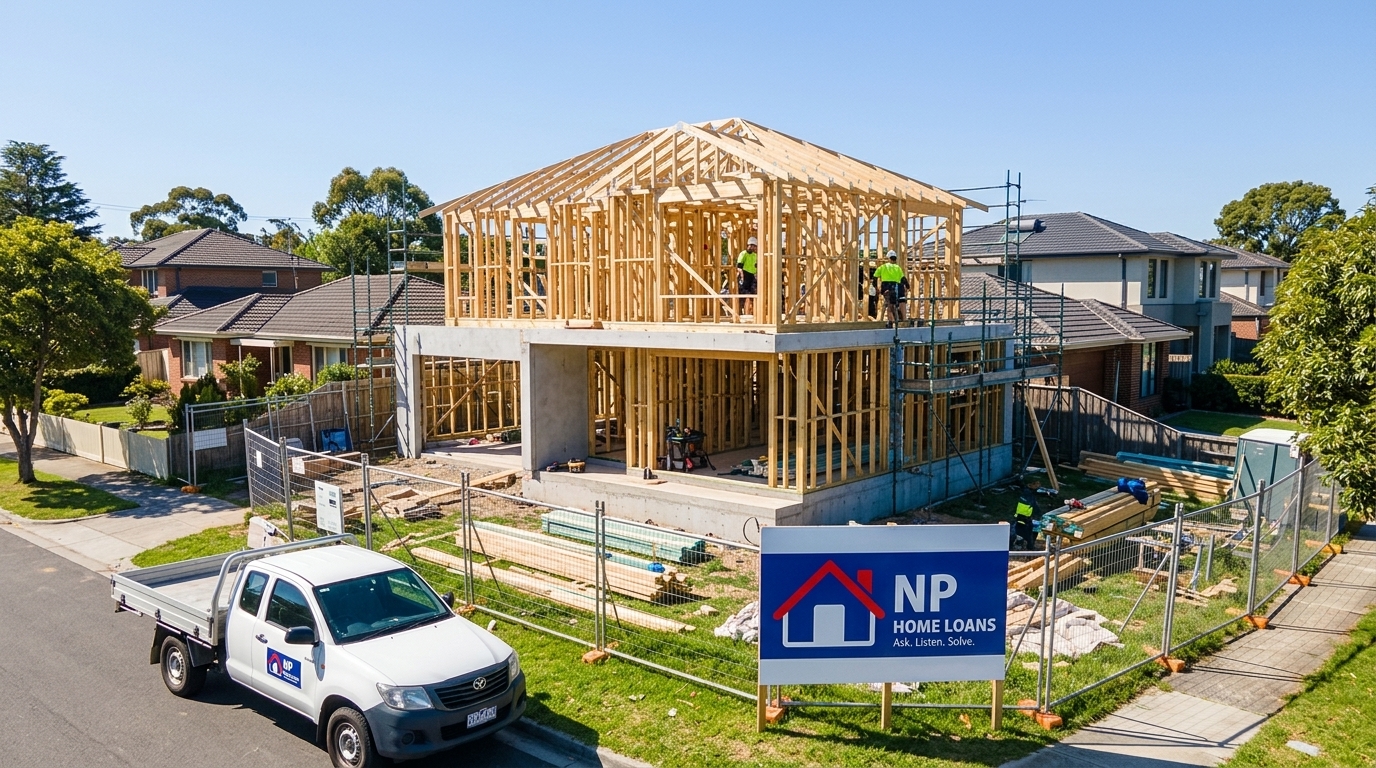
The Construction Loan Playbook: How to Build or Renovate Without Running Out of Cash
Building or extensively renovating your dream home in places like Mt Waverley, Chadstone, or across the Monash area is an exciting milestone. Whether you are replacing a 1950s weatherboard with a modern double-storey home or expanding your family living space, the journey should feel rewarding.
However, behind the glossy builder brochures and design mood boards lies a stress point that keeps many local homeowners awake at night: “What happens if we run out of cash halfway through the build?”
The surface problem seems to be getting bank approval. But the real pain point isn’t getting approved—it’s managing ongoing cash flow, dealing with builder variation costs, avoiding valuation shortfalls, and managing twin expenses (paying a mortgage while paying rent or living elsewhere) without draining your life savings.
At NP Home Loans, we believe in a simple approach: Ask. Listen. Solve. This playbook breaks down how construction loans work in Victoria and how to structure your finances so your build finishes smoothly on budget.
How Does a Construction Loan Work in Victoria?
Unlike a standard home loan where the lender transfers the full lump sum at settlement, a construction loan releases funds in gradual stages called progress payments (or progress draws).
In Victoria, standard Master Builders Association (MBA) or Housing Industry Association (HIA) fixed-price contracts usually break the build into five or six key stages:
Deposit / Slab Stage: Base site preparation and concrete slab pouring (typically 15% – 20%).
Frame Stage: Wall and roof timber framing completed (typically 20%).
Lock-Up Stage: Brickwork, external walls, roof, windows, and doors installed so the home is secure (typically 25%).
Fixing Stage: Plasterboard, internal joinery, cabinetry, and plumbing/electrical rough-ins (typically 20%).
Completion / Final Stage: Painting, detailing, final trade sign-offs, and handover (typically 10% – 15%).
During the build, you only pay interest-only payments on the amount drawn down so far, which helps lower your holding costs while construction is active.
The 3 Cash Flow Traps That Catch Monash Homeowners
1. The Bank Valuation Shortfall
Before a bank releases a single dollar, they conduct an “as if complete” valuation based on your building contract and architectural plans. If you plan a $600,000 build in Mt Waverley, but the bank valuer estimates the finished value adds only $500,000 in equity, you face a $100,000 cash gap that you must cover out-of-pocket before construction begins.
2. Prime Cost (PC) and Provisional Sum (PS) Blowouts
A “fixed-price” building contract isn’t always 100% fixed. Prime Cost items (fixtures, taps, appliances) and Provisional Sums (excavation, soil removal) are estimates. If your builder hits unexpected rock under your Chadstone lot, the extra excavation cost comes directly out of your cash reserves, not the initial loan amount.
3. Out-of-Pocket Variations
Want to add feature timber battening or upgrade kitchen stone mid-build? Lenders generally will not increase your construction loan limit mid-way through a build to cover design variations. You must pay these variations directly to your builder in cash.
Actionable Tips to Keep Your Construction Fund Bulletproof
Maintain an Emergency Cash Buffer (At Least 5–10%): Never allocate 100% of your savings into your deposit. Keep a dedicated liquid cash reserve for unexpected site variation invoices.
Order an Early Valuation Before Signing: Before committing to a binding builder contract, work with a dedicated mortgage broker to run upfront valuations with multiple lenders.
Synchronize Handover with Living Arrangements: Ensure your lease agreement or settlement timeframe on your current home accounts for potential builder delay liquidations.
Why Partnering with a Local Broker Makes the Difference
Navigating builder invoices, bank inspection reports, and loan drawdown requests can quickly feel like a second full-time job.
At NP Home Loans, located right in the Mt Waverley and Chadstone community, we take the heavy lifting off your hands. We don’t just find you a competitive rate; we manage the entire progress payment workflow between your builder and the bank, ensuring trades are paid on time and your build keeps moving without administrative delays.
Frequently Asked Questions (FAQ)
Can I use equity from my existing Mt Waverley home to fund a renovation?
Yes. If you have built up equity in your current property, you can refinance or release equity to cover renovation costs or use it as the deposit for a construction loan without needing to sell first.
What documents do I need to apply for a construction loan?
You will need your signed HIA/MBA fixed-price building contract, detailed building plans, engineering specifications, insurance schedules, and standard income verification documents (payslips, tax returns).
What happens if my builder delays completion?
Most Victorian building contracts include “liquidated damages” clauses where the builder pays a daily or weekly fee for unapproved delays. Having a local broker helps coordinate extended loan terms with your lender so your financing stays compliant.